By the age of thirteen, I’d had over 1,000 police interactions. They were all positive. This is because growing up, my stepdad was a police officer. The interactions were at the dining table or while driving a go-kart in a nearby parking lot. He was one of the nicest people I’ve ever met. He was a role model and inspiration.
My stepdad was one of the few Black police officers serving with the reserve police force in Washington D.C., in the 1960s and 1970s during the height of the civil rights movement.
So, growing up, I had a foundation of respect for those who feel called to protect and serve our communities. My eyes and heart were conditioned to see and appreciate good policing. Everywhere I looked, year after year, I found many examples of good police and good policing.
As a young teenager, I was sitting in my room, and a slow song started playing on the radio with an acoustic guitar intro. It was different than the Aerosmith and Led Zeppelin music I’d become familiar with. Some guy with a raspy voice started telling a story, through song, about a boxer who was wrongfully arrested, convicted, and incarcerated.
The other songs on the radio were formulaic and typically about three minutes long. They were performances. This was something different.
The song lasted 8 minutes 34 seconds. The song was “Hurricane,” and the singer was Bob Dylan. [YouTube, Wikipedia, Film]
That song, and that day, I’d remember for the rest of my life. Through further learning and study, I would find out about others who were wrongly arrested, and groups of people who seemingly are disproportionately arrested and/or poorly treated. I learned of people who had fallen between the cracks of our social safety nets — people with mental health needs, substance abuse issues, and/or levels of poverty that make it difficult to fit in.
I remember reading the statistics of how mentoring impacts young people. Lower rates of drug use. Higher rates of staying in school. Overall better outcomes for their entire life because of even just one good role model. Some kids have nobody like that in their life. Some kids may have a Big Brother / Big Sister in their life, or a family member who they can trust.
Growing up, I had about seven full-time exceptional role models and mentors in my life, who were also like friends I could trust and look up to: a Quaker school teacher, a Maritime administrator with the equivalent of a 3-star-admiral rank, a police officer, two grandmothers, numerous wonder-inspiring aunts and uncles, as well as great siblings. When I wasn’t with them, I was at the neighbor’s house watching Mister Rogers’ Neighborhood or Sesame Street. That was my world.
On that foundation, I was able to experience Quaker education, and also was able to go to a wonderful public University back when higher education was more affordable. For one of my classes, there were twelve students, and three award-winning professors: a doctor, a law professor, and the head of the English department. The professors were all present for every class. We read classic literature and discussed difficult ethical cases throughout history as part of a program called Literature, Science, and the Arts.
So, now as an adult, I have a great amount of gratitude for the support and opportunities I had growing up.
When I learn about people who didn’t have the support and opportunities I had growing up, I get a little emotional. I hear about what’s happened in their lives. The bad decisions, bad outcomes, and bad circumstances almost seem predictable. How would my life have turned out without numerous mentors, impactful educators, and an abundance of career growth opportunities?
I carry with me an enduring, growing, unyielding appreciation for police and those working in public safety.
I also have a strong concern for those who ended up on a self-destructive path and seem to be unable to get free from those cycles. I’m worried about incarcerated people who are doubly marginalized and disenfranchised, sometimes without anyone to help or a support network to fall back on.
With Justice Path Forward, I hope to provide writings and resources to help people carry in their hearts an appreciation for those who support the public safety of our communities, and also compassion for people who aren’t yet experiencing the American Dream.
Thanks for your interest. I welcome feedback and suggestions for improvement. [Contact]
About the Author
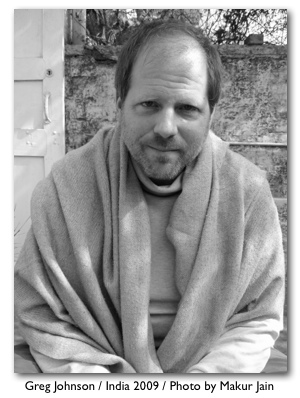
Greg Johnson is from the Iowa City area and has spent his career working as a tech support specialist for non-profits, higher education, businesses, and individuals.